Does Vancouver Actually Need Air Conditioning?
For most of the city’s history, the answer was no. Vancouver’s temperate climate meant summers were mild by Canadian standards, and the occasional hot week was manageable with a fan and some open windows. Times have changed. The 2021 heat dome pushed temperatures past 40°C in parts of the Lower Mainland, contributing to hundreds of heat-related deaths across BC.
Since then, demand for air conditioning in Vancouver has surged. We saw demand for dramatically higher installation volumes each summer. What was once a luxury is increasingly a health and safety consideration, particularly for elderly residents, families with young children, and anyone with a cardiovascular or respiratory condition. 2021 was a turning point. We went from occasional questions about AC to it being one of the first things new homeowners ask about.
The good news is that the Vancouver climate means fewer months of heavy use compared to somewhere like Phoenix or Toronto. That makes the efficiency of your chosen system even more important. You want something that performs well during those intense summer stretches without costing a fortune year-round.
The four types of air conditioners in Vancouver
Not all air conditioners are equal, and the right choice depends on whether you rent or own, whether you’re in a house or a strata, and how many rooms you need to cool. Here’s how each type works and where it fits.
Portable air conditioners
Portable units are the most accessible option. They sit on the floor, connect to a window via a flexible exhaust hose, and require no installation beyond plugging in. Their biggest advantage is flexibility: wheel it to the bedroom at night, move it to the home office during the day.
The drawback is efficiency. Portable ACs are the least efficient category, particularly single-duct designs, which pull cooled air from the room to exhaust heat outside, creating a negative pressure that draws warm air in through gaps. If you’re buying portable, look for dual-duct designs or units with inverter compressors — both significantly improve real-world performance.
They’re the go-to choice for renters and strata owners where window modifications aren’t permitted. Expect to spend $400–$800 for a quality unit.
Window air conditioners
Window units mount into a sliding sash window frame and are considerably more efficient than portable alternatives — roughly twice as efficient on average. ENERGY STAR-certified models with variable-speed or inverter compressor technology are the most efficient in this category.
The limitation is that they require a compatible window (typically a vertical sliding sash) and must stay in place — you can’t move them from room to room. They’re ideal for cooling a specific space like a bedroom or home office consistently throughout the summer.
One important consideration for Vancouver specifically: many strata corporations prohibit or restrict window AC units, citing aesthetic concerns or building envelope rules. Always check your strata bylaws before purchasing. Units cost $300–$700.
Central air conditioning
A central system circulates cool air through your home’s existing ductwork, providing consistent, whole-home cooling. It’s the most comfortable option if you need to cool multiple rooms, and it operates quietly since the noisy compressor is located outside.
Central AC is also the most expensive: installation typically costs between $3,000 and $8,000, depending on your home’s size and whether ductwork modifications are required. It makes the most sense for larger detached homes in areas like Burnaby, Coquitlam, or South Surrey, where summer heat is most pronounced, and the investment in a whole-home system is justifiable.
If your home doesn’t have existing ductwork — common in older Vancouver houses and many West End apartments — a ductless heat pump is often a better alternative.
Heat pumps: the Vancouver-smart choice
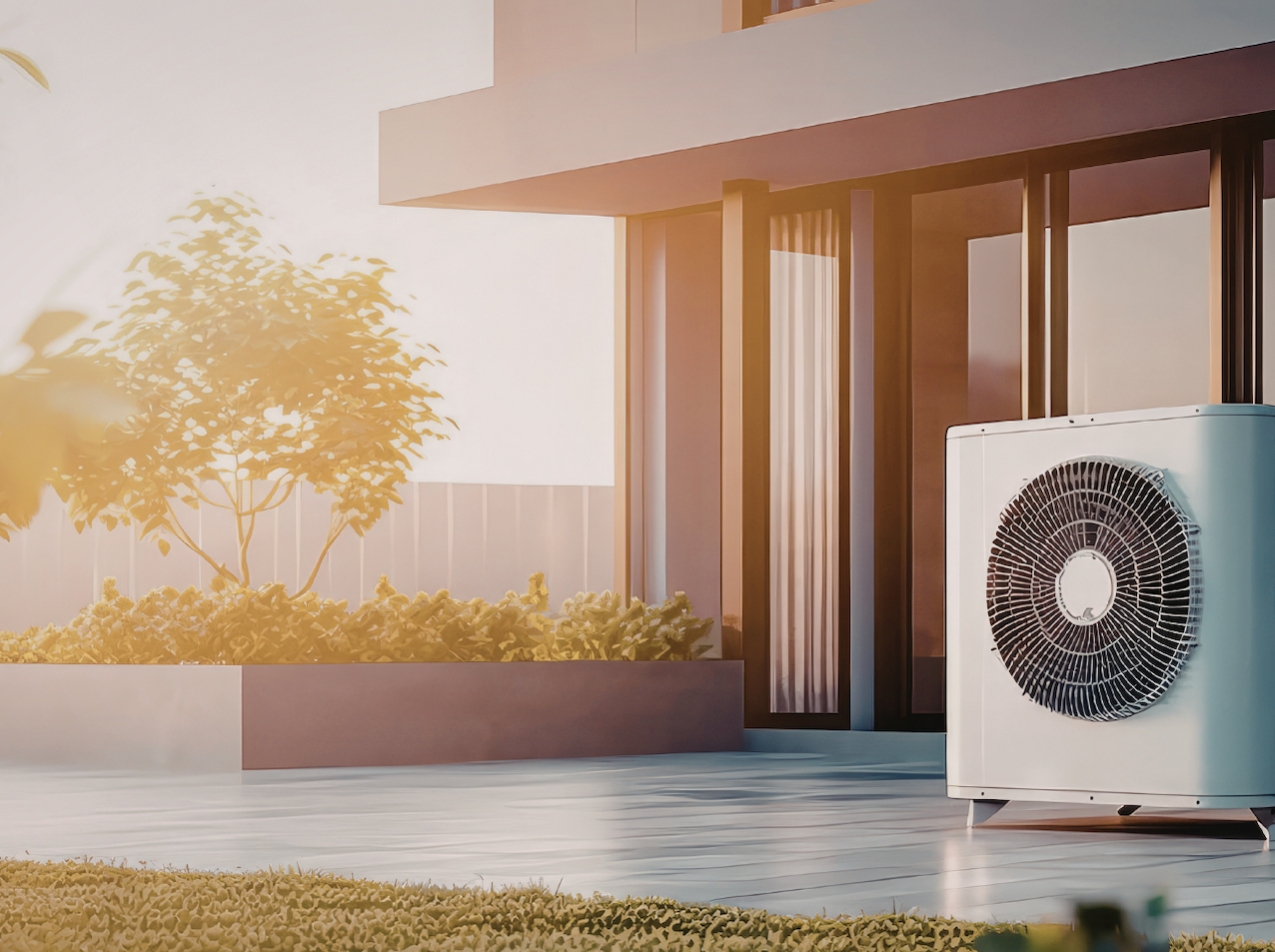
A heat pump isn’t marketed as an air conditioner, but it functions as one. In summer, it extracts heat from inside your home and moves it outdoors. In winter, it runs in reverse, extracting heat from outdoor air (even at low temperatures) to warm your home.
This dual function makes heat pumps particularly well-suited to Vancouver’s climate. Rather than investing in separate heating and cooling systems, you get both in a single unit. Modern ductless mini-split heat pumps operate at two to four times the efficiency of electric baseboards and can be installed without ductwork, making them viable for a wide range of Vancouver homes and suites.
Understanding air conditioner efficiency ratings
Efficiency ratings determine how much electricity an air conditioner consumes for a given amount of cooling output. Choosing a higher-rated unit reduces your hydro bill — especially important given BC Hydro’s tiered rates that increase once you pass a certain monthly threshold.
For room air conditioners (window and portable units), the relevant metric is the Combined Energy Efficiency Ratio (CEER). It measures the cooling output in BTUs per hour divided by the total watt-hours consumed, including energy use in standby mode. A higher CEER means lower running costs.
| Type | Typical CEER range | Relative efficiency | Est. monthly running cost* |
| Heat pump (mini-split) | COP 2.5–4.5+ | Highest | $8–$18 |
| Window AC — ENERGY STAR inverter | CEER 12–15 | High | $18–$28 |
| Window AC — standard | CEER 9–12 | Moderate | $26–$40 |
| Portable AC — dual duct | CEER 7–8.4 | Lower | $34–$50 |
| Portable AC — single duct | CEER 5.6–7 | Lowest | $42–$65 |
*Estimates based on cooling a 200 sq ft room for 8 hrs/day over a 30-day period at BC Hydro Step 1 rates. Actual costs vary.
The takeaway is that the cheapest unit to buy is rarely the cheapest to run. A $350 portable AC used heavily over several Vancouver summers will cost significantly more in electricity than a $600 ENERGY STAR window unit.
How to size an air conditioner for your Vancouver home
Sizing is one of the most commonly misunderstood aspects of AC selection. The instinct is to buy a bigger unit — more cooling capacity means it’ll handle the heat more easily, right? In practice, an oversized unit is counterproductive.
An air conditioner cools by cycling on, removing heat, then cycling off. An oversized unit reaches the target temperature too quickly, shuts off before it has time to dehumidify the air, and leaves the room feeling cool but clammy. It also wears out the compressor faster through short-cycling. An undersized unit, meanwhile, runs constantly and never quite catches up on the hottest days.
The right size is one that can maintain your target temperature while running for most of its cycle.
Air conditioner sizing formula
Air conditioner capacity is measured in BTUs (British Thermal Units). A simple starting formula:
Room area (sq ft) × 25 = BTUs required. For example, a 12 ft × 14 ft bedroom (168 sq ft) needs approximately 4,200 BTU. Round up to the next standard size. In this case, a 5,000 BTU unit is appropriate. Adjust upward by 10–20% if the room gets strong afternoon sun, has a high ceiling, or is regularly occupied by more than two people.
For whole-home systems, central AC or multi-zone heat pumps, sizing involves a proper load calculation that accounts for insulation values, window area, orientation, local climate data, and more. This is something our technicians calculate when providing a free in-home estimate.
Six tips for efficient conditioning in Vancouver
Even the most efficient unit can run up a significant electricity bill if used carelessly. These habits make a meaningful difference.
- Set the thermostat at 24–26°C – Each degree lower increases energy consumption by roughly 5–8%. The 24–26°C range is the comfort-efficiency sweet spot for most people.
- Pre-cool on cooler nights – Vancouver nights often drop to 16–18°C. Open windows to flush out stored heat in the evening, then close up in the morning to retain the cool air.
- Keep the room sealed – Close all windows and doors in the cooled room. Even small gaps allow warm air to infiltrate, forcing the unit to run longer.
- Block afternoon sun – South- and west-facing rooms accumulate enormous heat from direct sun. Closing blinds or installing external shading before peak sun can cut cooling load significantly.
- Clean filters every 4–6 weeks – A clogged filter can reduce cooling capacity by 15–20% and cause the unit to ice up. It’s a two-minute job that makes a measurable difference.
- Book a pre-season service with Harbour Energy – A professional tune-up each spring keeps refrigerant levels correct, clears coils, and catches potential failures before the first heat wave of the year.
What does air conditioner installation cost in Vancouver?
Costs vary considerably depending on the type of system and the complexity of the installation. Here’s a practical breakdown:
- Portable AC — $400–$800 for the unit. No professional installation required.
- Window AC — $300–$700 for the unit. Installation is typically DIY, or we can assist for around $80–$120 in labour.
- Central air conditioning — $3,000–$8,000 fully installed, including any required ductwork modifications. Larger homes or those requiring new duct runs sit at the higher end.
- Ductless mini-split heat pump (single zone) — $3,500–$5,500 installed. This covers one indoor air handler and an outdoor compressor unit.
- Multi-zone mini-split system (2–4 zones) — $6,000–$12,000+, depending on the number of zones and complexity of the installation.
Keep in mind that CleanBC and BC Hydro offer rebates for qualifying heat pump installations. Depending on the system, these can offset $1,000–$6,000 of the installation cost. Our team can advise on which systems currently qualify and help you navigate the application process. The right air conditioner for Vancouver isn’t necessarily the cheapest to buy; it’s the one with the lowest total cost of ownership over five to ten years.”
Air conditioning in Vancouver condos and stratas
This is one of the most frequently asked questions we receive, and the answer is: it depends on your specific strata corporation’s bylaws.
Many Vancouver strata buildings restrict or prohibit window-mounted air conditioners for aesthetic reasons or concerns about damage to the building envelope. If your building falls into this category, your practical options are:
- Portable AC — generally permitted since it doesn’t require any modification to the building.
- Ductless mini-split — requires a small penetration through an exterior wall for the refrigerant lines, which typically requires strata approval. Some buildings are receptive to this, particularly if the installation is done professionally and the exterior unit is discreetly located.
Always verify with your strata council before purchasing any cooling equipment. If you’re uncertain about what’s permitted, we’re happy to discuss the options for your specific building during a free consultation.
For Air Conditioner Installation in Vancouver
To get an estimate about air conditioning installation in Vancouver or other HVAC services, reach out at 604-272-7272 or use our website contact form.